Bricks & blocks
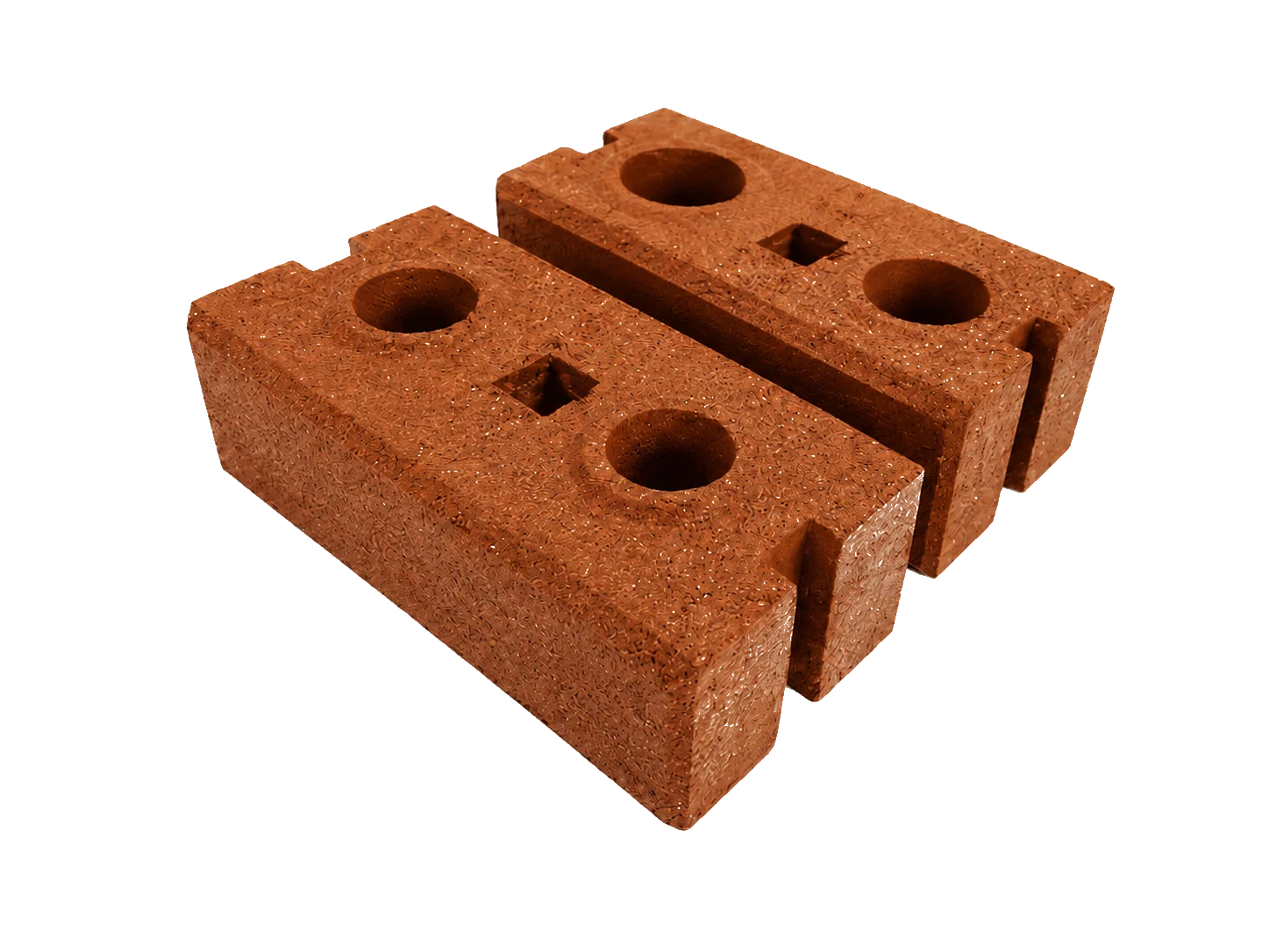
Compressed stabilised laterite, pressed to a repeatable dimension with an interlocking profile. Walls, screen walls, infill panels.
Materials
Laterite is the red earth already under most of this country. We screen it, stabilise it and dose it by formula, then press it into bricks and pavers or bag it as cement. Here is what each one is, what it is good for, and where it is the wrong choice.
The Range
Everything Ecored sells starts as the same thing: laterite, the red earth that already sits under most of this country. We screen it, stabilise it and dose it by formula. What changes between products is only the format it leaves the plant in — pressed into a brick, pressed into a paver, or bagged as cement for the mortar and screeds that hold the rest together.
Compressed stabilised laterite, pressed to a repeatable dimension with an interlocking profile. Walls, screen walls, infill panels.
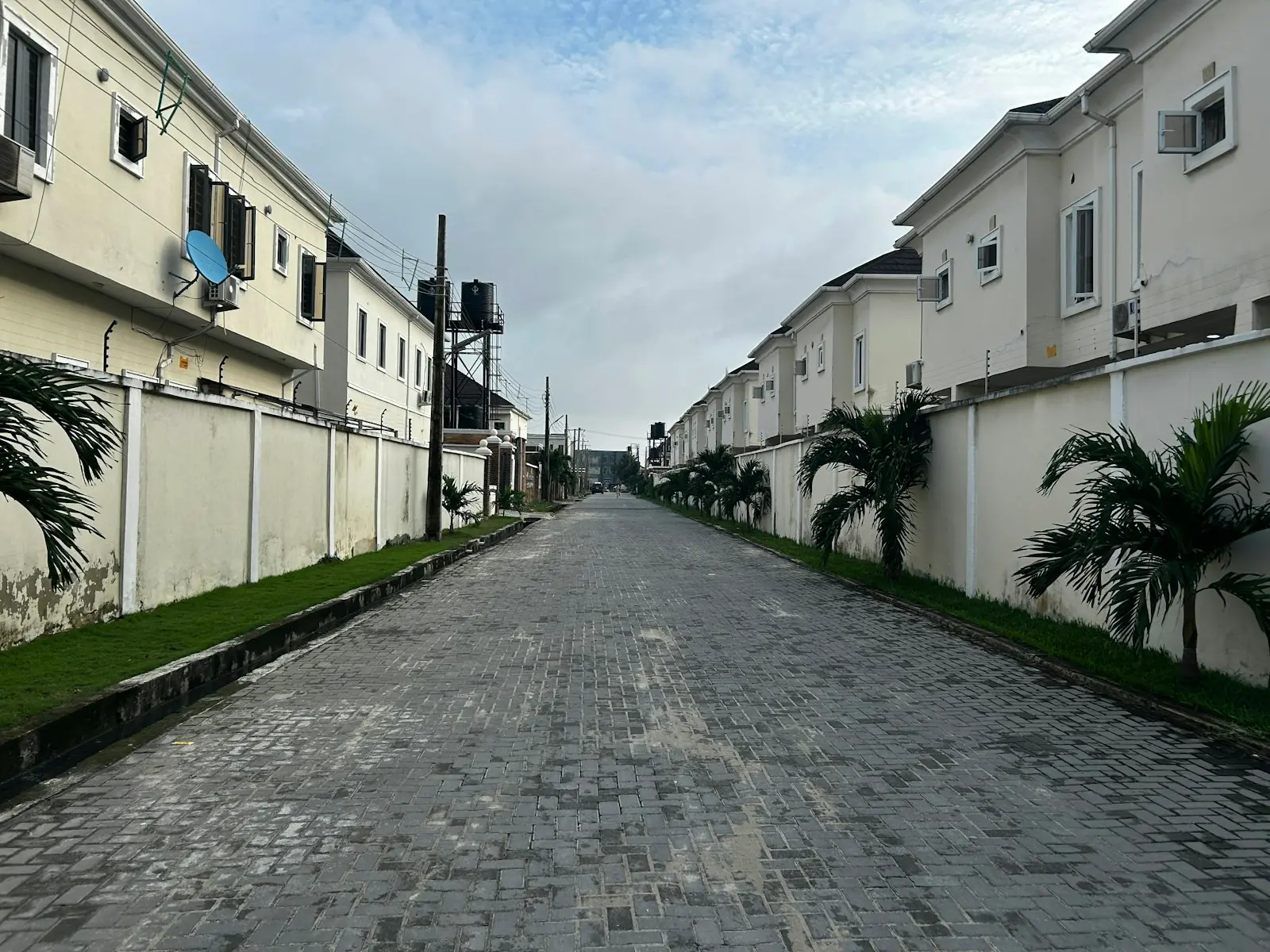
The same body pressed thinner and denser for ground work. Laid dry on sand, so the surface can be lifted and put back.
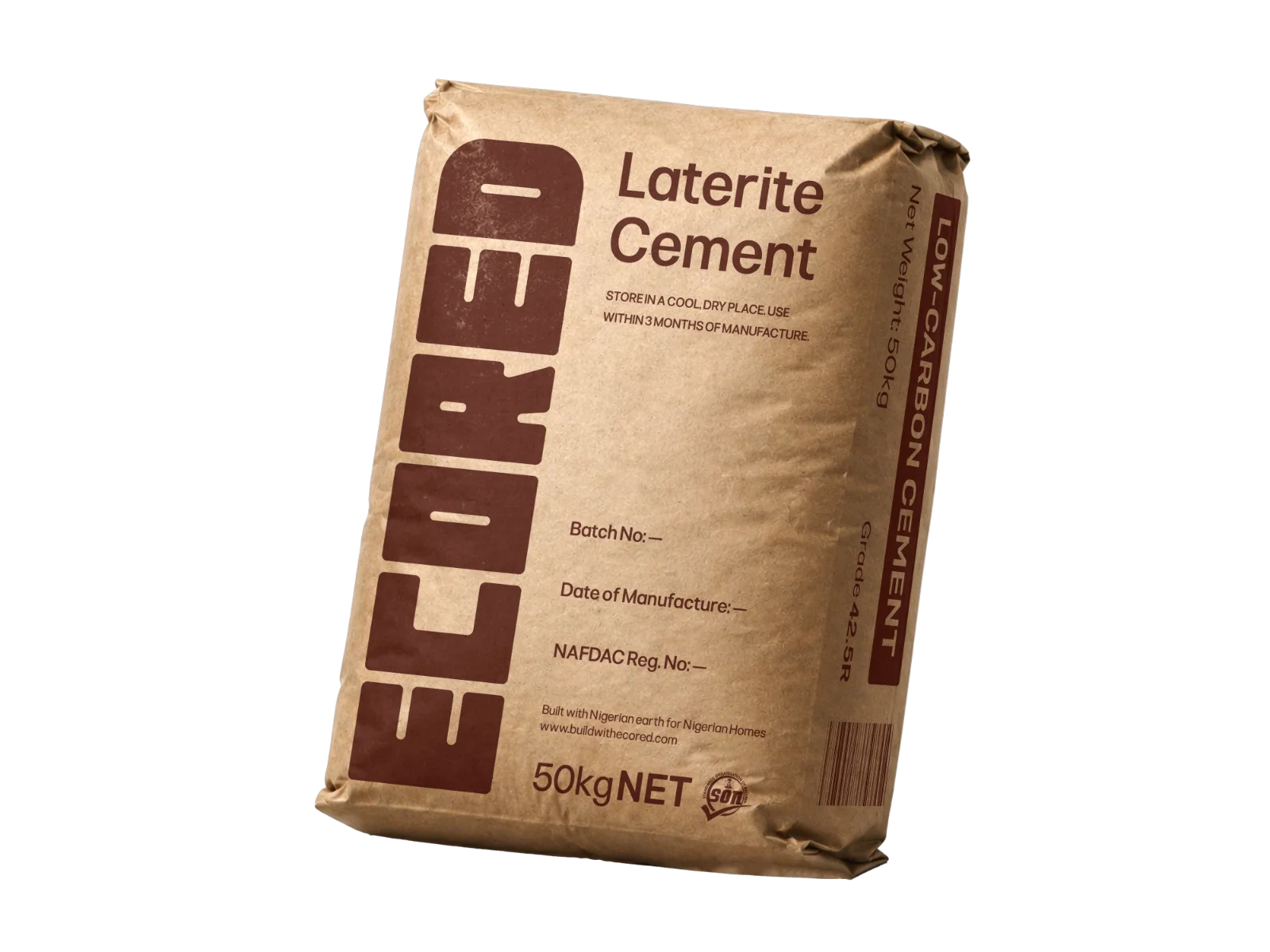
Grade 42.5R in a 50kg bag. A laterite–pozzolan–clinker blend, dosed in the plant rather than guessed on site.
01 — Walls
Screened laterite is blended with a stabiliser, pressed under high compaction and cured. No firing, so no kiln and no burnt topsoil. What comes out is dimensionally consistent, which is the whole point: a wall built from units that are all the same size behaves the way the drawing said it would.
Each unit carries a raised key on one face and a matching recess on the other. Courses seat into each other dry, so the wall holds its line without mortar in every bed joint. Mortar goes where it does structural work — the first courses, lintel levels, and wherever the engineer calls for it.
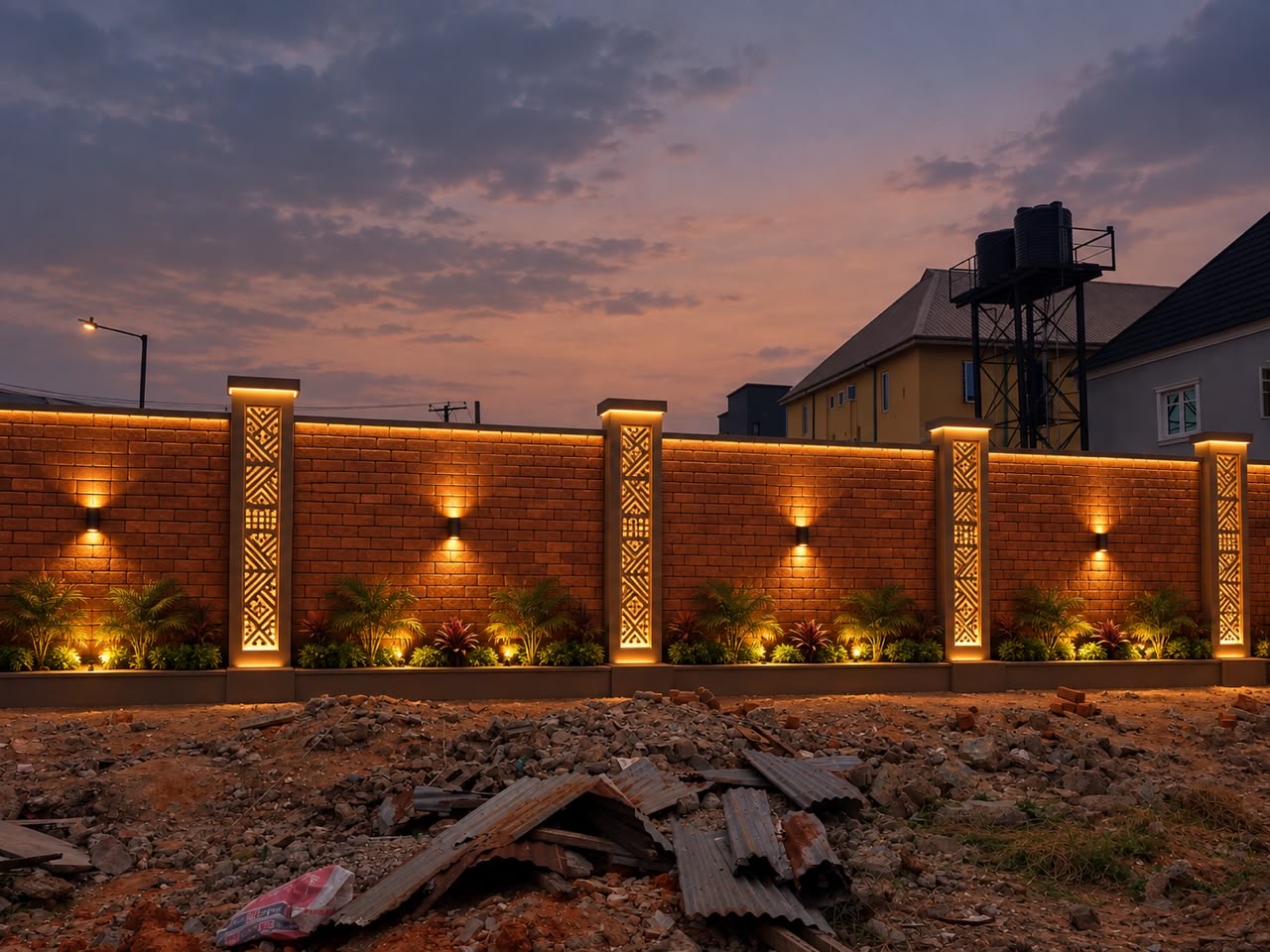
Less mortar means less cement bought, less sand hauled and less water carried. It also means a smaller skilled-mason requirement per square metre, because setting an interlocking course is closer to placing than to laying. Rework from out-of-square units largely disappears.
| Composition | Screened laterite with a cement stabiliser, compressed. Unfired. |
|---|---|
| Nominal size | Held to a single press tolerance across a batch. Exact dimensions are stated on the data sheet issued with your quotation — we would rather give you the figure for the units you are actually buying than a catalogue number. |
| Compressive strength | 6.4 N/mm² indicative, from our own batch testing. Certification pending with NBRRI. |
| Water absorption | Under test. Stabilisation is dosed for wet-season exposure; the certified figure will be published rather than estimated here. |
| Laying rate | Quoted per crew after a site survey. The interlocking profile removes most bed-joint mortaring, which is where the time saving sits. |
| Finish | As-pressed laterite face, left un-rendered by default. Takes a render or a wash if the design calls for one. |
| Thermal behaviour | High thermal mass. The wall absorbs heat through the day and gives it back at night, which is why earth buildings run cooler in this climate. |
Anything with sustained water contact or ground moisture — retaining walls, below-damp-course courses, septic and soakaway construction, or swimming pool surrounds. Stabilised earth resists weather; it is not a waterproof material. Use conventional concrete below the damp-proof course and start the laterite above it. If a designer tells you otherwise, ask us and we will say the same thing.
Sourcing
Laterite is not uniform. It changes clay content and iron content from one bank to the next, and that variation is exactly what makes traditional earth building unpredictable. Our answer is not to find perfect earth. It is to test what we take, correct the mix to a formula, and record which batch went where.
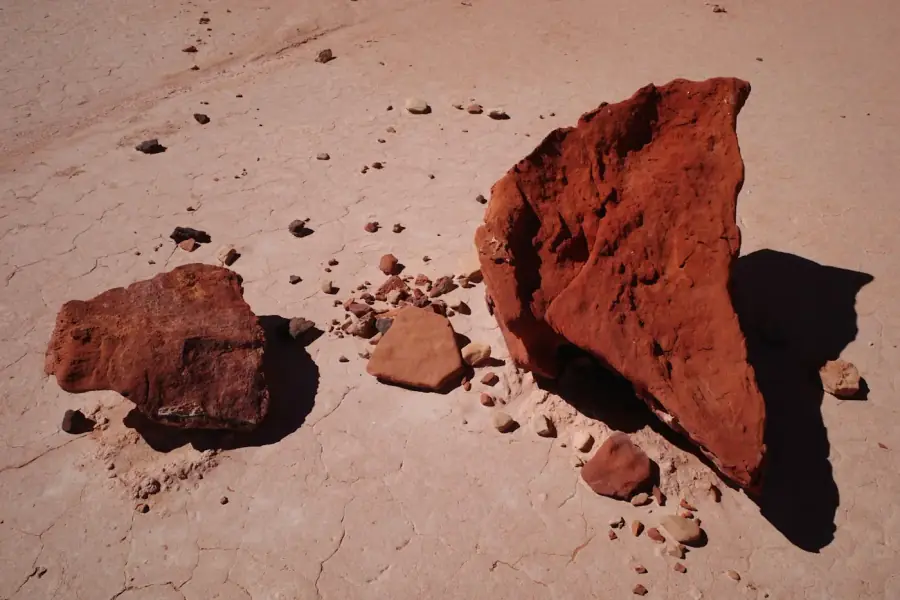
Oversize and organic matter are removed before anything reaches the press. Grading is checked per batch, because a mix that is right by weight and wrong by particle size still gives a weak unit.
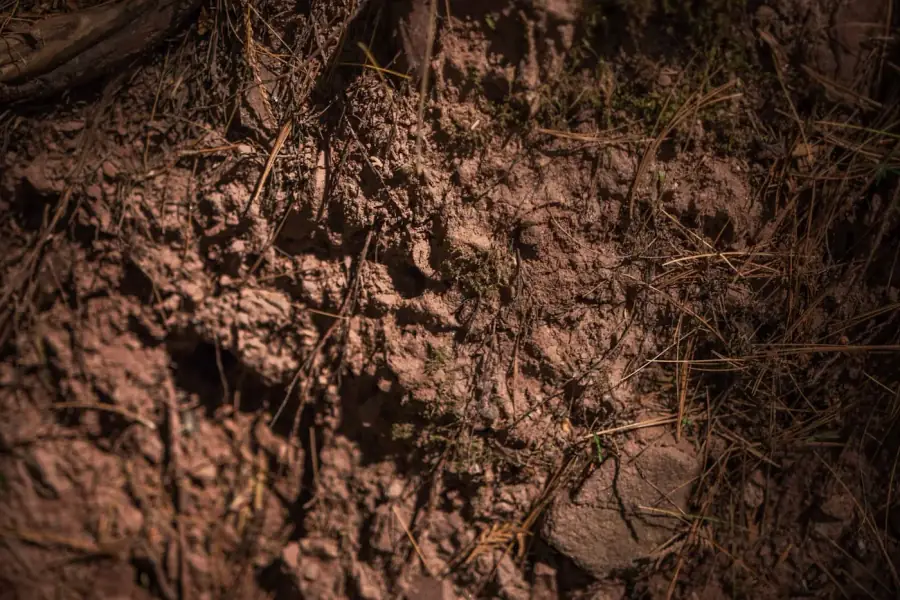
Stabiliser is dosed against the tested clay fraction of that batch, not against a standing recipe. Two deliveries from two banks should behave the same in your wall.
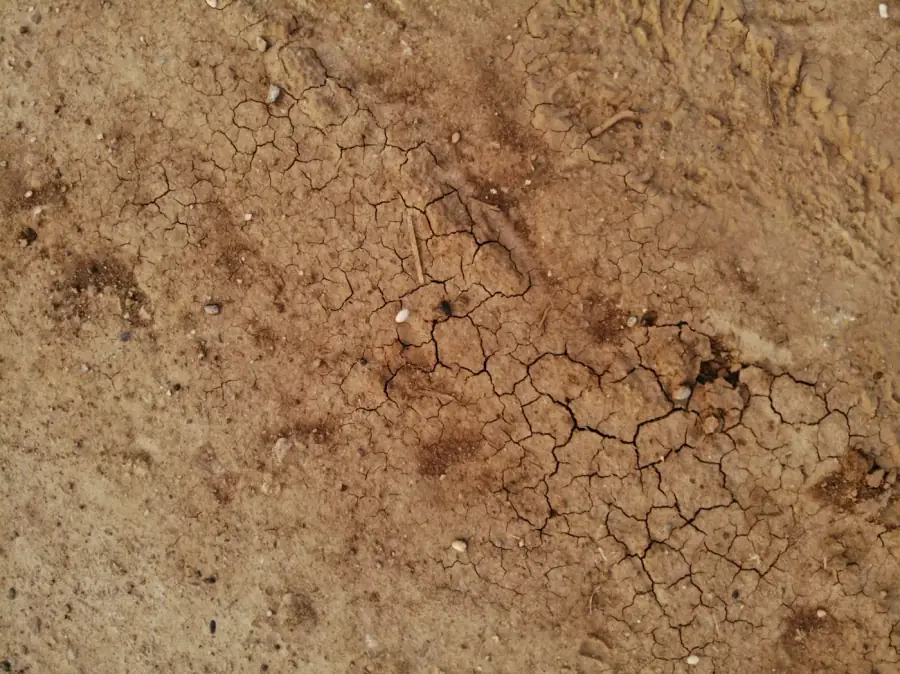
Batch number and manufacture date travel with the product. If a unit ever underperforms, we can trace it to the day it was made and the earth it was made from.
02 — Ground
The same stabilised laterite body, pressed thinner and to a higher density for surfaces that take traffic. Pavers are laid dry on a compacted sand bed with a sand-filled joint. Nothing is glued down, which is the useful part: the surface can be lifted, the service under it worked on, and the same units put back.
Interlocking pavers spread wheel load across neighbouring units instead of cracking in a line the way a poured slab does. Repairs are local — you lift the failed area, correct the bedding, relay.
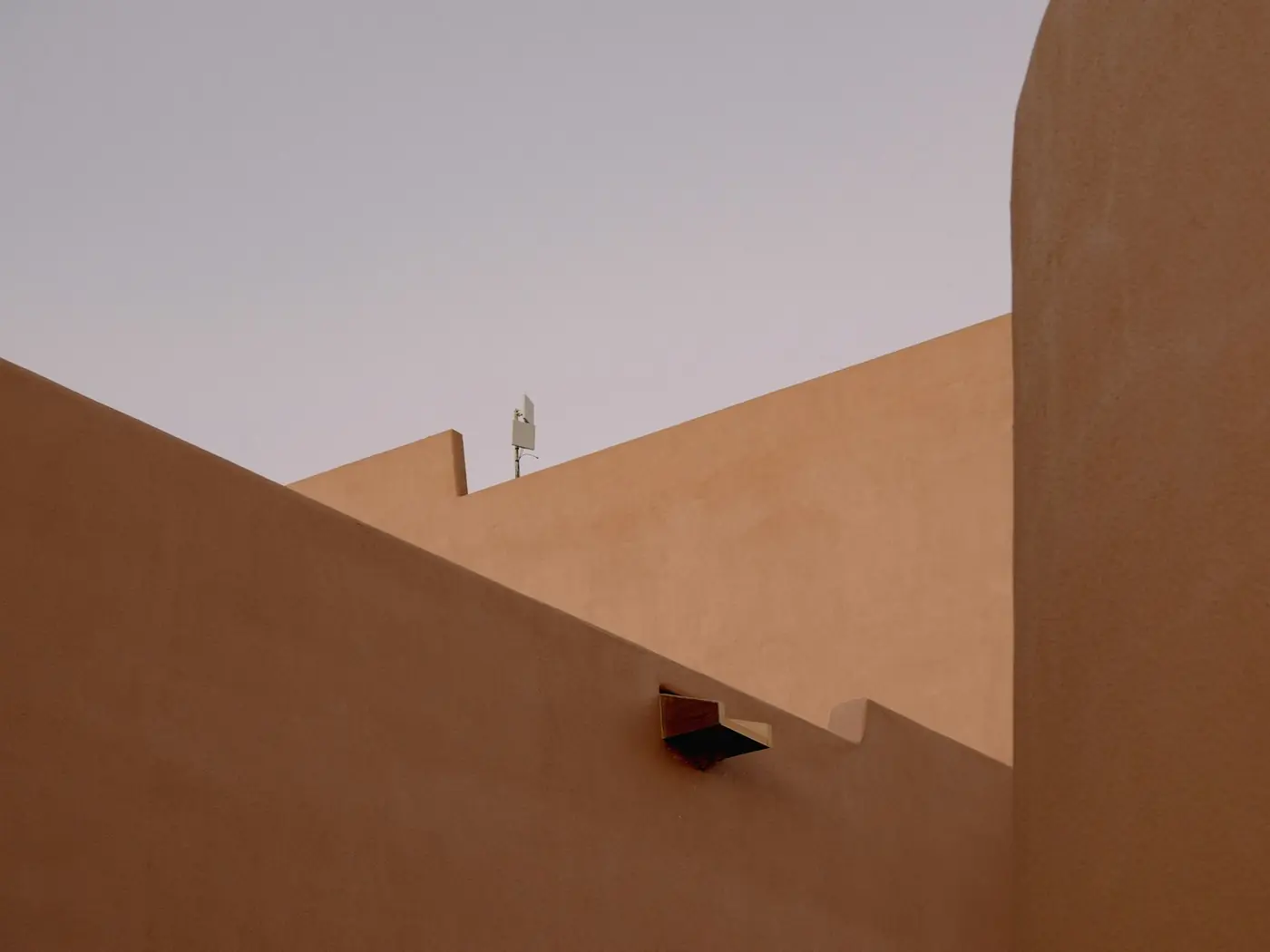
A permeable joint lets rain drain through the surface rather than sheeting off it, which reduces standing water at compound level. The laterite face stays cooler underfoot than dark asphalt.
| Composition | Stabilised laterite, compressed to a higher density than the wall unit. Unfired. |
|---|---|
| Profile | Interlocking plan shape. Units key into their neighbours so load is shared across the field rather than carried by one unit. |
| Nominal size and thickness | Specified against use — pedestrian, light vehicle or estate road. Confirmed on the data sheet issued with your quotation. |
| Compressive strength | Under test for the paver body. We will not publish a figure for a traffic surface before it is certified. |
| Bedding | Compacted sub-base, sand bedding layer, sand-filled joints. Edge restraint required on every free edge. |
| Drainage | Permeable jointing. Water passes at the joint into the bedding layer rather than running to a single outfall. |
| Serviceability | Liftable and reusable. Trenching for a pipe or a cable does not mean breaking out and re-pouring a surface. |
| Finish | As-pressed laterite face. It will weather and lighten with exposure, as earth does. |
The Blend
Ordinary Portland cement gets its carbon from clinker. Making clinker means heating limestone until it gives up its carbon dioxide, and then burning fuel to hold that heat. Almost all of the emissions attributed to a bag of cement sit in that one step, before anything reaches a mixer.
Our blend replaces part of that clinker with laterite and a pozzolan — materials that are already reactive, or that can be activated at far lower temperature. Every kilogram of clinker displaced is a kilogram that did not have to be calcined. That is the mechanism, and it is a well-established one in cement chemistry; it is not something Ecored invented.
What we will not do is print a percentage next to it yet. A carbon figure is only meaningful with its boundary stated — whether it counts raw material extraction, plant fuel, transport to site, or the whole life of the building. Ecored is measuring cradle-to-gate for our own plant, and we would rather publish one defensible number later than a flattering one now. When the assessment is complete it goes on the research page with the boundary written above it.
03 — Binder
The bag that goes with the bricks. Grade 42.5R is a rapid-hardening classification, which matters on a site where the next course is going up the same week. It is dosed by formula in the plant and sealed, so what you open on site is what we tested in the lab — not a bag that has been standing open in a shed absorbing humidity.
Batch number and manufacture date are printed on every bag. Keep the bag tag on a structural pour and you keep a chain back to our plant records. If something is ever wrong, we can find it rather than argue about it.

Laterite, a pozzolan and clinker. The laterite and pozzolan carry part of the binding work that clinker would otherwise do alone, which is where the emissions reduction comes from and also why the set colour runs warmer than grey OPC.
| Product | Ecored Laterite Cement |
|---|---|
| Grade | 42.5R — rapid hardening |
| Bag weight | 50kg |
| Composition | Laterite, pozzolan and clinker, dosed by formula at the plant. |
| Certification | SON certified. SON is the standards body for building materials in Nigeria; ask any supplier who claims otherwise which body actually certified them. |
| Traceability | Batch number and manufacture date printed on every bag. |
| Carbon | Cradle-to-gate assessment in progress. No figure published until the boundary can be stated with it. |
| Storage | Dry, off the ground, out of direct sun. Rapid-hardening cement is less forgiving of damp storage than a slower grade. |
| Uses | Mortar, render, screeds and general concrete work alongside Ecored bricks and pavers, or on its own. |
Ordering
Ecored started production in 2026. Our commercial terms are still being finalised, and we would rather tell you that than quote you a schedule we cannot yet hold to. Here is how it works today.
Bricks, blocks and pavers are quoted and delivered by the truckload. Part-loads are possible within Abuja and the surrounding FCT, but they carry a higher unit rate, because the delivery cost does not shrink with the order. Cement is sold by the pallet; single-bag sales are not something we run.
Lead time is set by production, not by stock — we press against orders rather than holding a large yard. Within Abuja and the FCT, expect a short lead time confirmed at the point of order. Outside the FCT it grows with haulage distance and with how much of your order we can press in one run. We give you a date when we accept the order, and if that date moves you hear it from us before you hear it from your site.
We quote materials and delivery separately. Haulage moves with diesel, road condition and distance, and folding it into a material rate only hides who is charging you for what. You see the material cost, you see the delivery cost, and you can put your own truck on the job if that works out cheaper.
Where the site is and whether a loaded truck can reach the offloading point. Quantities, or the drawings and we will take them off. What the units are doing — walls, ground, or both. Your programme dates, so we can say honestly whether we can meet them.
If you want us on site as well, build supervision and machinery are quoted separately. The FAQs cover most of what people ask before a first order, and about Ecored explains where the company currently stands.
Send drawings or just the quantities and the location. We will come back with a material rate, a delivery rate and a date we can actually hold — within two working days.